Prostaline ingredients: pumpkin seed, gotu kola, saw palmetto, pygeum bark
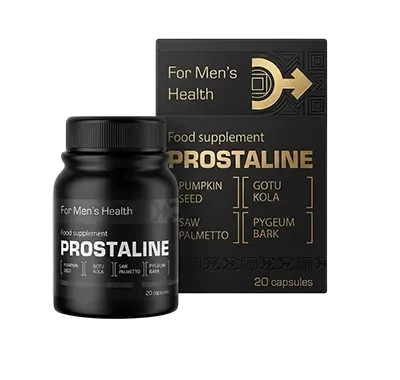
The Prostaline label names four ingredients. Here is what each one is, what regulators and researchers say about it, and what stays unknown because the pack shows no amounts and no type of extract.
Request a call backKey points
- The label names four ingredients but shows no amounts and no type of extract.
- Each ingredient has its own page with the studies, the limits and the safety notes.
- Pygeum comes from Prunus africana, a tree of Kenya's mountain forests listed in CITES Appendix II.
- None of the research tested Prostaline itself.
What are the four ingredients in Prostaline?
The Prostaline label names pumpkin seed, gotu kola, saw palmetto and pygeum bark. It does not show how much of each is in a capsule, or which extract is used. That gap matters, because research and regulator opinions refer to specific extracts and doses, and cannot be applied to the product as a whole.
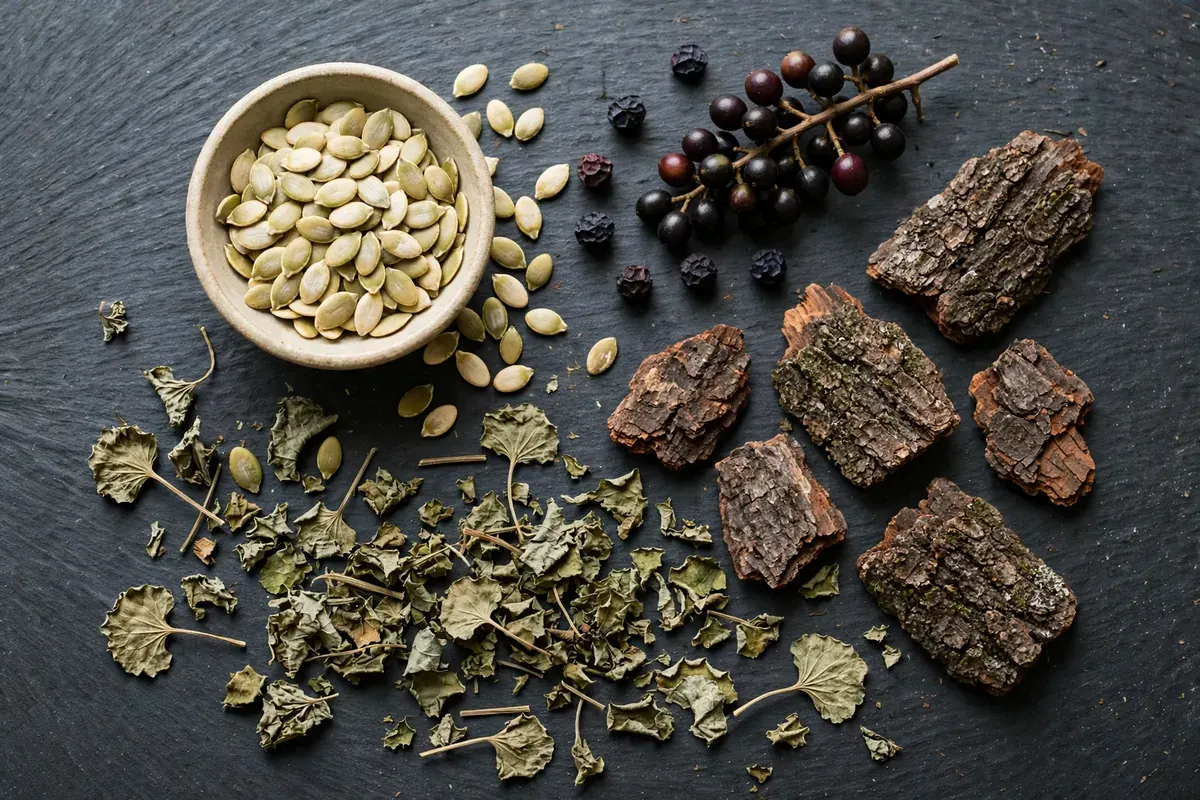
| Ingredient | Plant part (EMA) | Latin name | Regulator view in one line |
|---|---|---|---|
| Pumpkin seed | Seed | Cucurbita pepo | Traditional use only, no well-designed trials (EMA 2012) |
| Gotu kola | Aerial parts (herb) | Centella asiatica | Listed only for skin use on minor wounds, oral use left out (EMA 2022) |
| Saw palmetto | Fruit (berries) | Serenoa repens | Specific extracts accepted for traditional and well-established use (EMA 2015) |
| Pygeum bark | Bark | Prunus africana | One extract accepted for traditional use (EMA 2016) |
EMA is the European Medicines Agency. Its herbal committee (HMPC) describes herbal medicines, not food supplements. Sources read on 27 November 2026.
Prostaline
Food supplement in capsules, 20 capsules
- Two fields only: name and mobile number
- Food supplement in capsules, 20 per pack
- Payment and delivery are confirmed by phone
- Available to order: the request goes to the seller
What do we know about each ingredient?
The records are uneven. Saw palmetto has the most research and the sharpest disagreement. Pygeum has older, shorter studies. Pumpkin seed rests on tradition. Gotu kola has no prostate indication at all and carries the most cautions. Open a page for the studies, their limits and the safety notes.
-
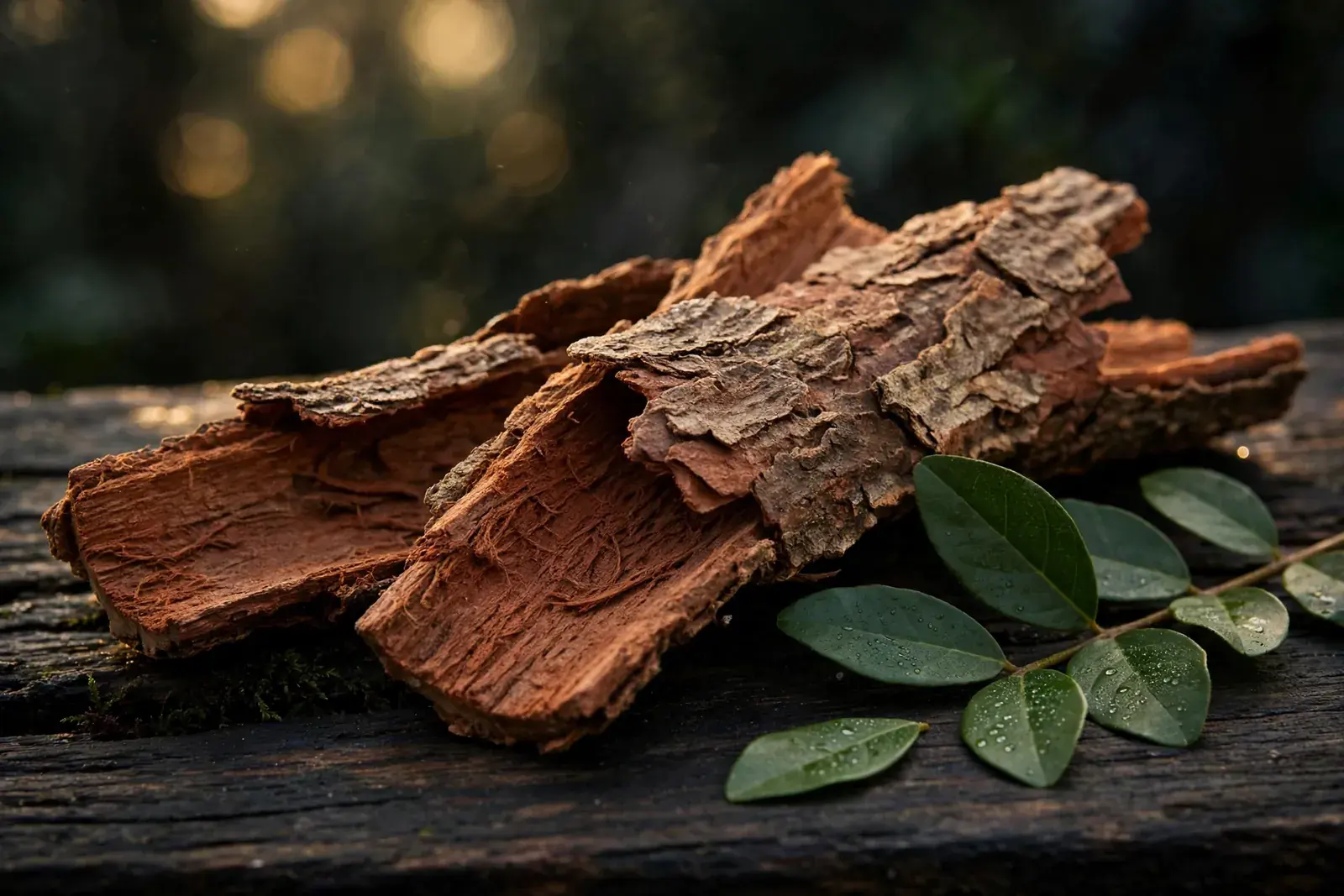 Pygeum bark Prunus africana, the African cherry Cochrane (2002): 18 small, short trials in 1,562 men. EMA lists one extract for traditional use. Read the evidence
-
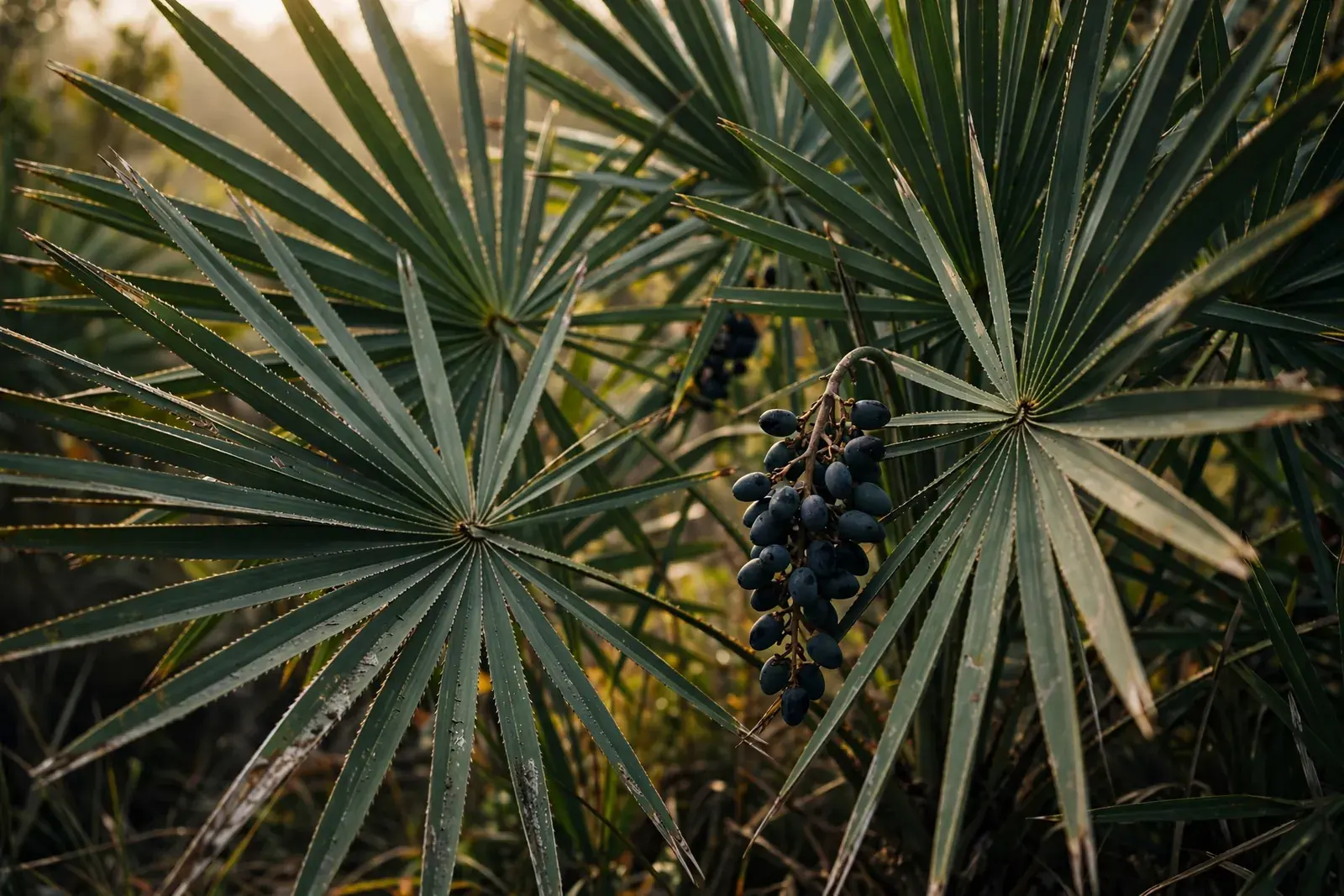 Saw palmetto Serenoa repens Cochrane (2023): little to no benefit when used alone. Evidence for blends is uncertain. Read the evidence
-
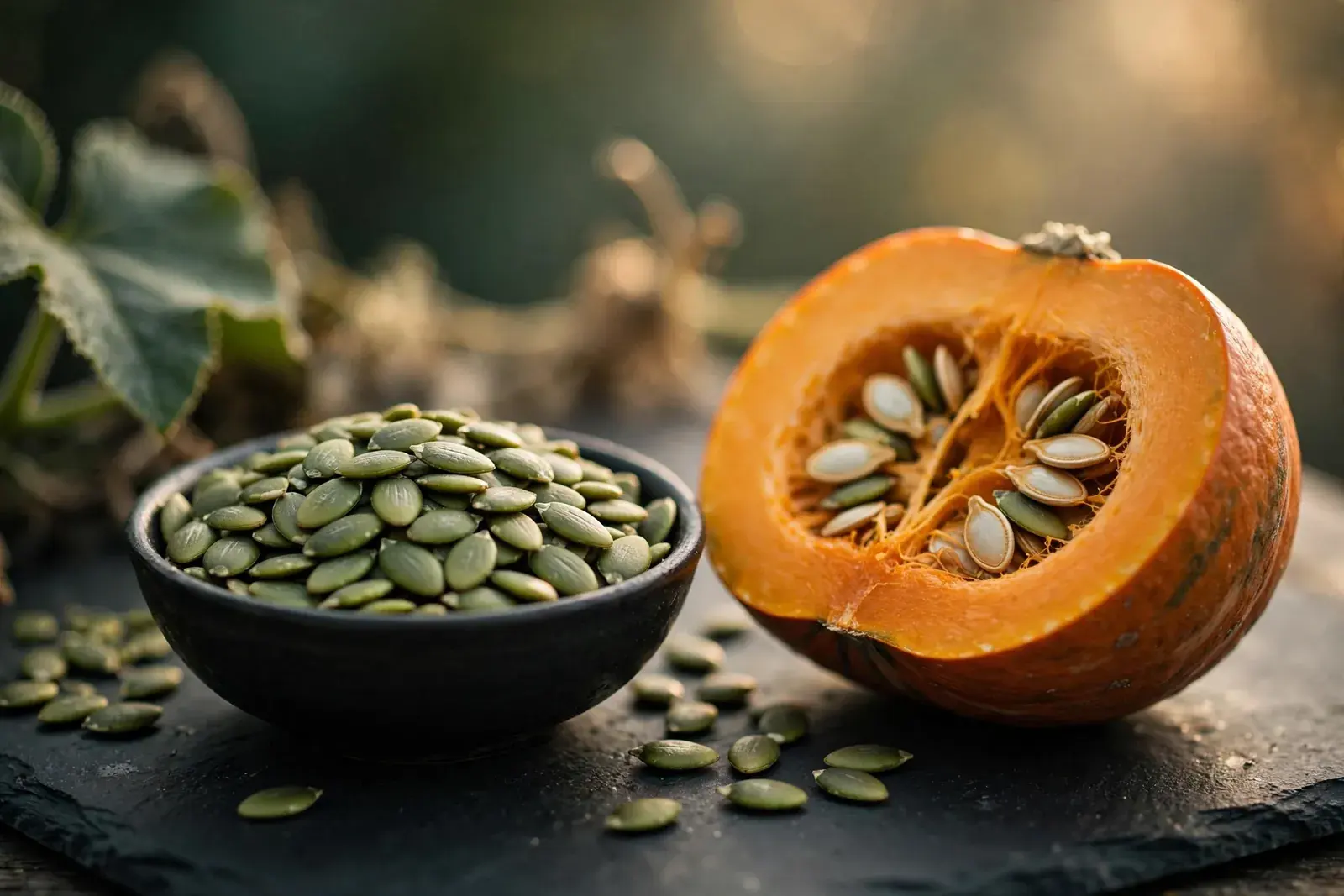 Pumpkin seed Cucurbita pepo EMA (2012): traditional use, no well-designed trials. Whole seed and extract capsules were tested differently. Read the evidence
-
 Gotu kola Centella asiatica No regulator lists it for the prostate. EMA left oral use out because of liver and fertility concerns. Read the evidence
Why does pygeum matter in Kenya?
Pygeum comes from the bark of Prunus africana, a tree of the mountain forests of tropical Africa, and Kenya is on the list of countries where it grows. CITES says the species has been in Appendix II since 16 February 1995, and in 2006 its Plants Committee categorized populations from Kenya and six other countries as "of urgent concern".
We do not know where the bark in Prostaline comes from, or whether it was harvested and traded with the permits that this listing calls for. We therefore cannot call the product sustainable or ethical. It is a fair question for the seller.
What can we not say about the Prostaline ingredients?
Several basic facts are missing from the pack and from the seller's page. Until the seller supplies them, any claim about what the capsules do would be a guess, and we do not make guesses.
| Unknown | Why it matters |
|---|---|
| Amount of each ingredient per capsule | Studies and monographs use set doses; a small amount tells you little |
| Type of extract and solvent | EMA treats hexane and ethanol saw palmetto extracts differently, and the pygeum monograph describes a chloroform extract |
| Origin of the pygeum bark | Prunus africana is in CITES Appendix II |
| Manufacturer, batch and expiry date | Needed to trace a product and to know it is in date |
| Evidence for the four together | Cochrane (2023) says combinations with saw palmetto carry more uncertainty |
What should you ask the seller about the ingredients?
Ask for facts, and write the answers down before you agree to anything. A seller who cannot answer these questions has told you something useful.
- How much of each of the four ingredients is in one capsule?
- Which extract is used for saw palmetto and pygeum, and how was it made?
- Where does the pygeum bark come from, and can you show the trade permit?
- What is the batch number and the expiry date on the pack I will receive?
- Does the product contain anything not on the label, such as sharpleaf galangal fruit, which the seller's page names?
Frequently asked questions
What is in Prostaline?
The label names pumpkin seed, gotu kola, saw palmetto and pygeum bark. It does not show the amounts or the type of extract. The seller's page also names sharpleaf galangal fruit, which is not on the label we saw.
Is saw palmetto proven for the prostate?
The sources disagree. NCCIH (2025) and a 2023 Cochrane review found it probably not helpful or of little to no benefit for urinary symptoms from prostate enlargement, while EMA accepts particular extracts at set doses for traditional and well-established use.
What is pygeum, and is it the same as Prunus africana?
Yes. Pygeum is the bark of Prunus africana, an African mountain-forest tree found in Kenya. EMA lists one extract for traditional use, and the tree is in CITES Appendix II because of overexploitation.
Is gotu kola safe to swallow?
Data are limited and cautious. EMA left oral use out of its monograph because of concerns about the liver and fertility, and LiverTox calls it a probable rare cause of liver injury, usually mild to moderate. Ask a doctor first, especially with liver disease.
Can I take Prostaline with blood thinners?
Ask your doctor first. EMA reports a few cases of suspected interaction between saw palmetto and warfarin, and notes that some medicine leaflets warn of a higher bleeding risk.
Why does the label not show amounts?
We do not know. The pack photo shows the four names but no quantities. Ask the seller on the call, and do not rely on research about other products with set doses.
Sources
- EMA/HMPC: EU herbal monograph on Serenoa repens fruit (2015), viewed 27 November 2026
- EMA/HMPC: Community herbal monograph on Cucurbita pepo seed (2012), viewed 27 November 2026
- EMA/HMPC: EU herbal monograph on Prunus africana bark (2016), viewed 27 November 2026
- EMA/HMPC: Assessment report on Prunus africana bark (2016), viewed 27 November 2026
- EMA/HMPC: EU herbal monograph on Centella asiatica herb (2022), viewed 27 November 2026
- EMA/HMPC: Assessment report on Centella asiatica herb (2022), viewed 27 November 2026
- NIH LiverTox: Centella asiatica (gotu kola), updated April 2024, viewed 27 November 2026
- NCCIH: Saw Palmetto, usefulness and safety (updated April 2025), viewed 27 November 2026
- NCCIH Clinical Digest: Benign prostatic hyperplasia and complementary approaches (January 2022), viewed 27 November 2026
- Cochrane review 2023: Serenoa repens for lower urinary tract symptoms due to benign prostatic enlargement, viewed 27 November 2026
- Cochrane review 2002: Pygeum africanum for benign prostatic hyperplasia, viewed 27 November 2026
- BMC Urology 2021: Pumpkin seed oil versus tamsulosin for BPH symptoms, a single-blind randomized trial, viewed 27 November 2026
- CITES: African cherry (Prunus africana), viewed 27 November 2026
Prostaline
Food supplement in capsules, 20 capsules
- Two fields only: name and mobile number
- Food supplement in capsules, 20 per pack
- Payment and delivery are confirmed by phone
- Available to order: the request goes to the seller