Gotu kola (Centella asiatica): no prostate indication and liver cautions

Gotu kola (Centella asiatica) is the ingredient with the weakest case for the prostate and the most safety cautions. Here is what the EU regulator and the US liver database say, and what to ask before taking it by mouth.
Request a call backKey points
- Gotu kola (Centella asiatica) is a creeping plant used in traditional medicine in Asia and Africa; the pack lists it as one of four ingredients.
- No regulator lists it for the prostate. EMA covers only skin use for minor wounds, for up to one week.
- EMA left out oral use because of concerns about the liver and fertility; NIH LiverTox calls it a probable rare cause of liver injury, usually mild to moderate.
- A 2005 report describes three women who developed jaundice after taking it for 20 to 60 days; the authors could not rule out that stopping it alone explained their recovery.
- NIH LiverTox adds that none of its claimed properties has been proven in controlled human trials.
In one line: No prostate indication from any regulator we checked, and cautions about oral use.
What do regulators say about gotu kola?
The EU regulator EMA lists gotu kola only as a traditional skin product for minor wounds, to be used for no more than one week. Its assessment says oral use was left out of the monograph because of concerns about the liver and fertility. We found no authoritative source that supports gotu kola for the prostate.
| Source | What it says | Year |
|---|---|---|
| EMA monograph | A traditional herbal medicine "used to aid in healing of minor wounds", as an infusion for skin use, not for more than one week. Safety in pregnancy and breastfeeding not established; use under 18 not established. | 2022 |
| EMA assessment | Oral use "has not been reported in the HMPC monograph due to concerns on potential anti-fertility and hepatotoxic effects in humans". Case reports of liver toxicity after oral use exist. Studies in rats showed harm to fertility with ethanol extracts, with shortcomings that limit conclusions for humans. No liver toxicity in the clinical trials included. | 2022 |
| Case series (Spain) | Three women (61, 52 and 49 years old) "developed jaundice after taking Centella asiatica for 30, 20 and 60 days". All improved when it was stopped, and they also received ursodeoxycholic acid; the authors "cannot rule out" that stopping alone explained it. The first woman took it again and the damage recurred. A case series is not a trial and cannot give a risk rate. | 2005 |
| NIH LiverTox | Linked to "rare instances of clinically apparent acute liver injury with jaundice". Rating C: a probable rare cause. Usually self-limited and mild to moderate. Contamination of commercial products was not ruled out in the reports. | 2024 |
Sources read on 27 November 2026. The two sources reach different tones from limited data, so both are shown.
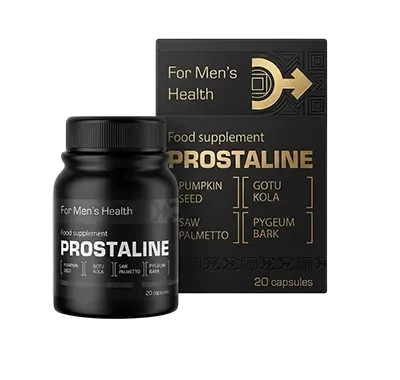
Prostaline
Food supplement in capsules, 20 capsules
- Two fields only: name and mobile number
- Food supplement in capsules, 20 per pack
- Payment and delivery are confirmed by phone
- Available to order: the request goes to the seller
Is there proof that gotu kola helps the prostate?
No. LiverTox states that the properties credited to gotu kola have not been proven in prospective, controlled human trials, and that it is not approved in the United States as therapy of any medical condition. The prostate is not among the uses any regulator lists.

If a seller says gotu kola supports the prostate, ask for the study. We did not find one in the sources we checked.
Who should be most careful with oral gotu kola?
People with liver disease, anyone who drinks a lot of alcohol or takes other medicines that burden the liver, men who want children, and pregnant or breastfeeding women should ask a doctor first. The evidence is limited both ways: reports of liver injury are rare, and the fertility data are from rats.
- Yellow skin or eyes, dark urine, or pain under the right ribs while taking it: stop and see a doctor.
- A man trying to father a child should ask a doctor first, because EMA cites fertility concerns from rat studies.
- Always tell your doctor about every supplement you take.
Frequently asked questions
What is gotu kola?
Gotu kola is Centella asiatica, a creeping plant used in traditional medicine. It is one of the four ingredients named on the Prostaline label.
Is gotu kola good for the prostate?
We found no authoritative source that says so. EMA lists it only for skin use on minor wounds, and NIH LiverTox says none of the properties credited to it has been proven in controlled human trials.
Is gotu kola safe for the liver?
The data are limited. NIH LiverTox calls it a probable rare cause of liver injury, usually mild to moderate, while EMA left oral use out of its monograph because of liver and fertility concerns.
Who should avoid gotu kola?
EMA says safety in pregnancy and breastfeeding is not established and gives no data for people under 18. People with liver problems should ask a doctor first.
Sources
- EMA/HMPC: EU herbal monograph on Centella asiatica herb (2022), viewed 27 November 2026
- EMA/HMPC: Assessment report on Centella asiatica herb (2022), viewed 27 November 2026
- NIH LiverTox: Centella asiatica (gotu kola), updated April 2024, viewed 27 November 2026
- Revista Espanola de Enfermedades Digestivas 2005: Hepatotoxicity associated with the ingestion of Centella asiatica (three case reports), viewed 28 November 2026
- NCCIH Clinical Digest: Benign prostatic hyperplasia and complementary approaches (January 2022), viewed 27 November 2026
- Pharmacy and Poisons Board: Guideline on Registration of Health Supplements in Kenya (June 2025), viewed 27 November 2026
Prostaline
Food supplement in capsules, 20 capsules
- Two fields only: name and mobile number
- Food supplement in capsules, 20 per pack
- Payment and delivery are confirmed by phone
- Available to order: the request goes to the seller