Pygeum bark (Prunus africana): what the research says and what it does not
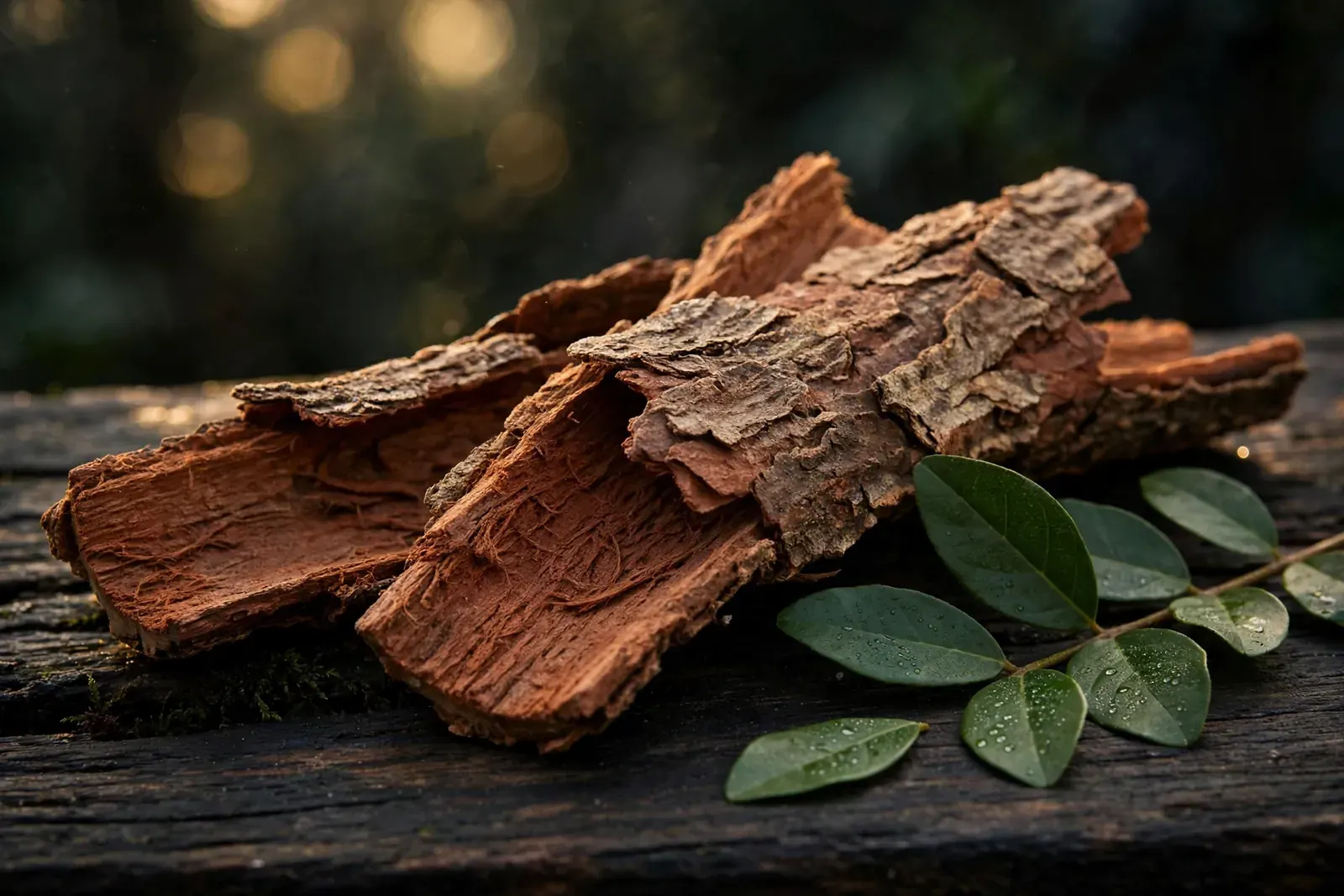
Pygeum is the bark of Prunus africana, an African tree that grows in the mountain forests of Kenya. Here is what regulators and reviewers say about it, what the studies could not show and what is unknown about the bark in Prostaline.
Request a call backKey points
- Pygeum is bark from Prunus africana, also called the African cherry, a tree of the mountain forests of equatorial Africa, Kenya included.
- Cochrane (2002) analysed 18 small, short trials in 1,562 men and called a standardized extract a possibly useful option, not a proven one.
- EMA lists one chloroform extract at a set dose for traditional use. The Prostaline pack shows no extract type and no amount.
- The tree is in CITES Appendix II because of overexploitation, and we do not know where the bark in Prostaline comes from.
In one line: Pygeum has older, shorter studies in men and one EU traditional-use listing; nothing tested the Prostaline capsule.
What is pygeum, and what do the sources say about it?
Pygeum is the bark of Prunus africana, the African cherry. The best records are a 2002 Cochrane review and a 2016 EMA monograph. Both describe particular preparations. Neither is about the bark powder or extract inside the Prostaline capsule, which the pack does not describe.
| Source | What it says | Year |
|---|---|---|
| Cochrane review | 18 randomized trials in 1,562 men, lasting 64 days on average. A standardized preparation "may be a useful treatment option", but the studies were small, short, used varied doses and rarely used validated outcome measures. Side effects were mild and comparable to placebo. | 2002 |
| EMA monograph | A traditional herbal medicine for lower urinary tract symptoms linked to BPH after a doctor has excluded serious conditions. Soft extract made with chloroform, at a set dose. Not for women or for people under 18. | 2016 |
| EMA assessment | Not enough data from well-designed clinical trials for well-established use. Regarded as safe at therapeutic doses. A 2023 review of the monograph found nothing that would trigger a revision. | 2016, 2023 |
| NCCIH | "Some limited evidence" of benefit. The studies were short, small and used varied formulations. Mild side effects such as diarrhea, nausea, constipation and headache. | 2022 |
Sources read on 27 November 2026. A regulator accepting traditional use of a medicine is not proof that it works, and not approval of a food supplement.

Prostaline
Food supplement in capsules, 20 capsules
- Two fields only: name and mobile number
- Food supplement in capsules, 20 per pack
- Payment and delivery are confirmed by phone
- Available to order: the request goes to the seller
Where does pygeum grow, and is it protected?
Prunus africana grows in the mountain forests of equatorial Africa, and Kenya is on EMA's list of countries. CITES lists it in Appendix II, which means trade is controlled because of overexploitation. In 2006 its Plants Committee categorized populations from Kenya and six other countries as "of urgent concern".

In Kenya the tree has local names: ICRAF lists Muiri in Kikuyu, Omoiri in Kisii and Olkoijuk in Maasai, and "red stinkwood" in English. It says the tree is common in Kakamega and Nyahururu forests, Limuru and Kericho.
We do not know where the bark in Prostaline was harvested or whether it was traded with the permits this listing calls for. We cannot call the product sustainable or ethical. It is a fair question for the seller.
What can the pygeum research not tell you?
Quite a lot. The studies are old, short and used different products, so they cannot be read as a result for any capsule on a Kenyan shelf. The table lists the gaps and why each one matters.
| Gap | Why it matters |
|---|---|
| Type of preparation | EMA describes a chloroform extract. A ground bark powder is a different product. |
| Dose | The monograph gives a set dose of that extract. The Prostaline pack shows no amount. |
| Length of the studies | Mean 64 days in the Cochrane review. Long-term effects are not covered. |
| No comparison with standard medicines | Cochrane found no trial of pygeum against alpha blockers or 5-alpha reductase inhibitors. |
| Origin of the bark | CITES Appendix II species; the seller has not named the source. |
Is pygeum safe, and who should ask a doctor first?
EMA regards preparations as safe at therapeutic doses, and reported effects are mild: digestive problems such as nausea, constipation or diarrhoea. A doctor should check urinary symptoms first, because they can come from infection, diabetes, medicines or cancer, and a supplement cannot tell these apart.
- Not for women, children or adolescents under 18 (EMA monograph).
- If symptoms worsen, or you get fever, spasms, blood in the urine, painful urination or you cannot pass urine, see a doctor at once.
- Tell your doctor and pharmacist about every supplement you take.
Frequently asked questions
What is pygeum?
Pygeum is the bark of Prunus africana, the African cherry, a tree of the mountain forests of equatorial Africa including Kenya. Extracts of the bark have been studied for urinary symptoms linked to an enlarged prostate.
Does pygeum work for an enlarged prostate?
The evidence is limited. A 2002 Cochrane review of 18 small, short trials called a standardized extract a possibly useful option, and NCCIH calls the evidence "limited". EMA says there are not enough well-designed trials for well-established use.
Is pygeum bark protected?
Yes. Prunus africana has been in CITES Appendix II since 16 February 1995 because of overexploitation, which means international trade is controlled.
What are the side effects of pygeum?
Reported effects are mild and mostly digestive: nausea, constipation, diarrhoea or headache. EMA lists no reported interactions, and has no fertility data.
Can I take pygeum with other medicines?
Ask your doctor or pharmacist. The EMA monograph reports no interactions, but a supplement that mixes four plants has not been studied together.
Sources
- ICRAF: Prunus africana, species sheet for Kenya, viewed 28 November 2026
- Cochrane review 2002: Pygeum africanum for benign prostatic hyperplasia, viewed 27 November 2026
- EMA/HMPC: EU herbal monograph on Prunus africana bark (2016), viewed 27 November 2026
- EMA/HMPC: Assessment report on Prunus africana bark (2016), viewed 27 November 2026
- NCCIH Clinical Digest: Benign prostatic hyperplasia and complementary approaches (January 2022), viewed 27 November 2026
- CITES: African cherry (Prunus africana), viewed 27 November 2026
- Pharmacy and Poisons Board: Guideline on Registration of Health Supplements in Kenya (June 2025), viewed 27 November 2026
Prostaline
Food supplement in capsules, 20 capsules
- Two fields only: name and mobile number
- Food supplement in capsules, 20 per pack
- Payment and delivery are confirmed by phone
- Available to order: the request goes to the seller